


Integrative modeling of glycoproteins
Speaker: Dr Mateusz Sikora, Dioscuri Centre for Modelling of Posttranslational Modifications at the Małopolska Centre of Biotechnology (at Jagiellonian University) and Max Planck Institute of Biophysics, Germany
Talk: Integrative modeling of glycoproteins
Time: 27.02.2026
Venue: Intercollegiate Faculty of Biotechnology, Abrahama 58, hall 042B
Glycans, complex sugars covalently attached to proteins, play crucial roles in protein stability and function, participate in "self" recognition, and modulate protein-protein interactions. Unlike proteins, glycans typically do not form secondary structures and remain highly mobile, posing challenges for traditional structural biology techniques. This high mobility, coupled with glycan heterogeneity, complicates the elucidation of complete glycoprotein structures and hinders research on the role of glycans in protein function. Although computer simulations can help address these challenges, they often require millions of hours on specialized supercomputers, highlighting the need for approximate methods that can be integrated into protein-solving pipelines.
To overcome these obstacles, we developed a simplified, open-source method for rapidly predicting the span and shape of glycans with minimal computing power. Using this approach, we can accurately predict SARS-CoV-2 spike protein epitopes that are not shielded by glycans, as well as assess the impact of glycans on protein flexibility. We also demonstrate that this method can be integrated with structural biology methods and glycoproteomics pipelines, offering a comprehensive tool for glycoprotein analysis.
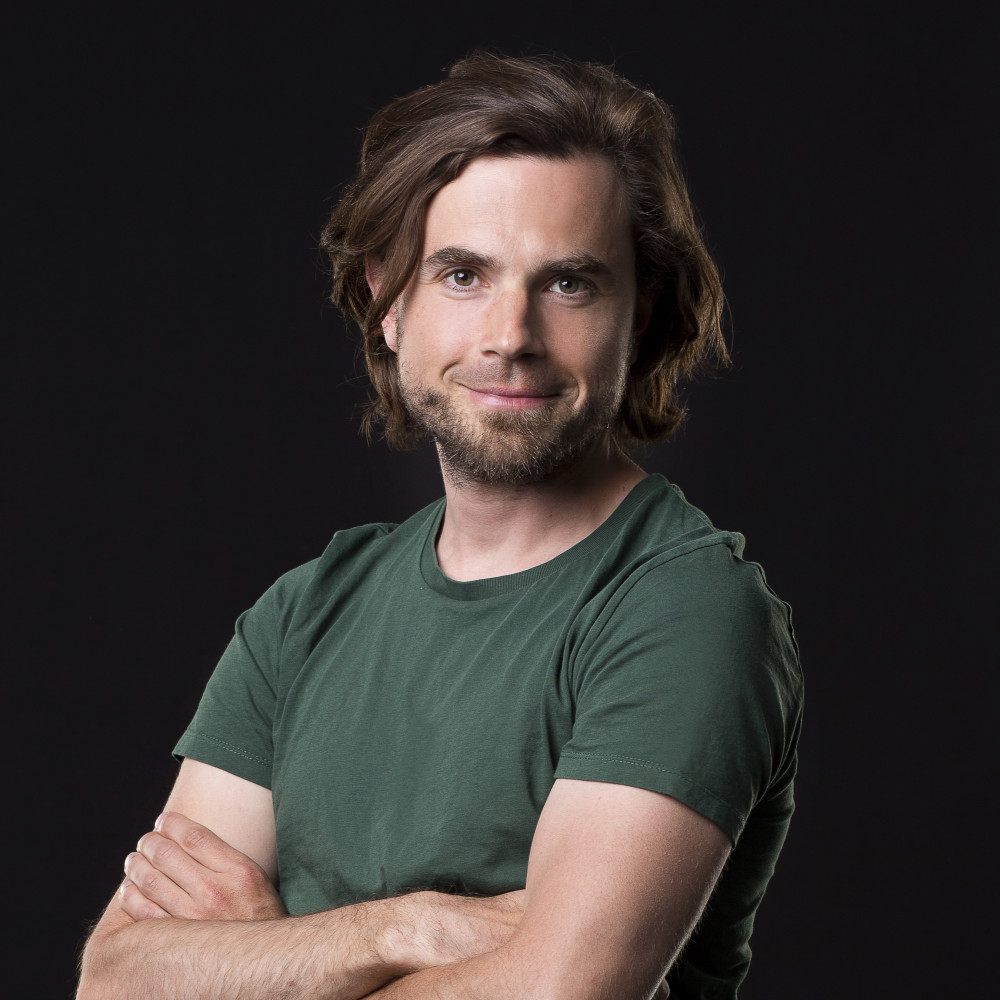
Mateusz Sikora is the head of the Dioscuri Centre for Modelling of Posttranslational Modifications at the Małopolska Centre of Biotechnology, at Jagiellonian University in Kraków, co-hosted by the Max Planck Institute of Biophysics in Frankfurt. He was trained in biophysics at the Jagiellonian University and obtained his PhD at the Polish Academy of Sciences in Warsaw. He carried out postdoctoral research at IST Austria, the University of Vienna, and the Max Planck Institute of Biophysics, focusing on molecular dynamics simulations of flexible biomolecular systems. His research combines computational modelling with structural biology and glycoproteomics to understand how posttranslational modifications regulate protein structure and interactions. He is the author of numerous publications in journals such as Science, Cell, and PNAS and a recipient of multiple national and international research grants.